Curriculum Development and Resources
Peace in Praxis develops curricula for in-person and on-line courses and trainings, as well as training manuals and other resources to support practitioners in implementing learner-centered engagements. We also conduct research on topics related to peacebuilding and produce reports, book chapters, and articles detailing findings and recommendations.
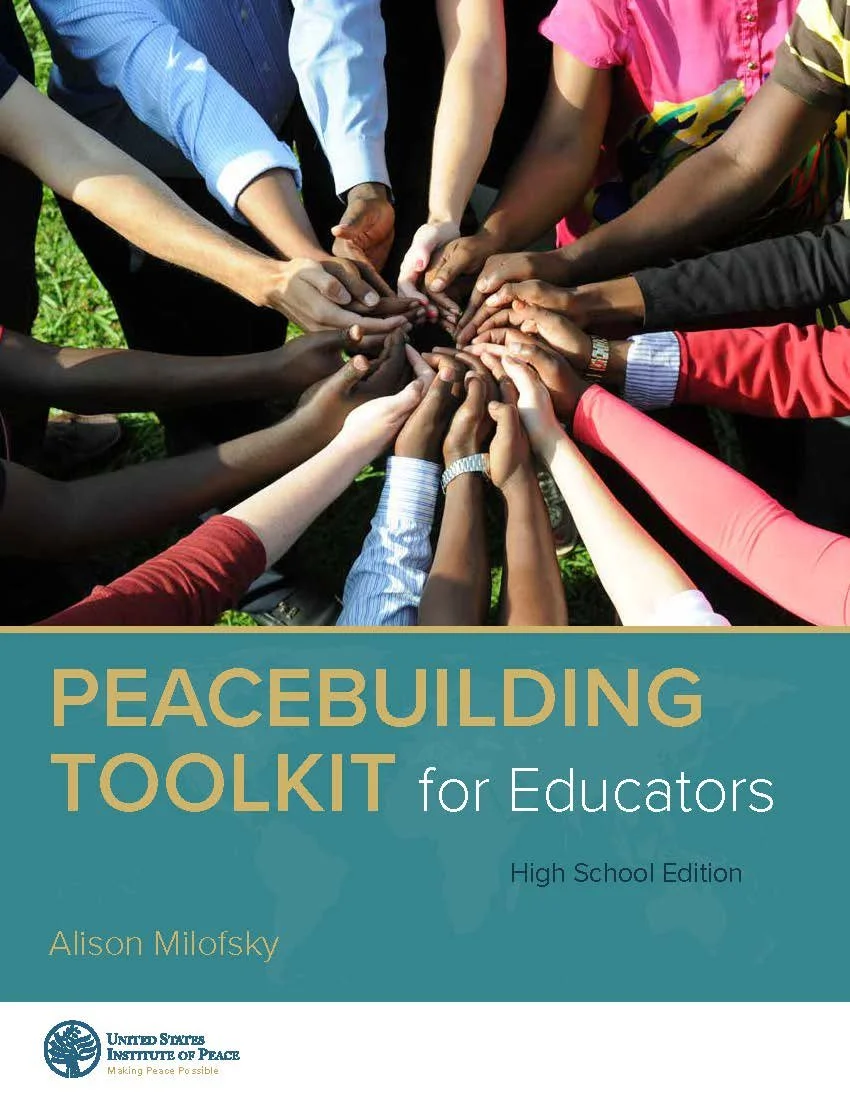
Peacebuilding Toolkit for Educators
Created at USIP, The Peacebuilding Toolkit for Educators is designed to support the work of educators as peacebuilders. It is a resource developed by and for educators, to help introduce peacebuilding themes and skills into the classroom. The Toolkit can help develop students’ understanding of, and interest in, global peacebuilding, and develop their skills and capacities to act as peacebuilders. It can help teachers develop their own understanding of key concepts and skills, and enhance their capacity to teach about global peacebuilding themes and issues.
The lessons have been developed with great detail to be useful for educators who are new to the methods employed that engage students in experiential learning and critical thinking. The toolkit is organized around basic themes within the field of peace and conflict.
Theme 1: Conflict is an inherent part of the human condition’
Theme 2: Violent conflict can be prevented
Theme 3: There are many ways to be a peacebuilder
High School Toolkit
Download the updated, expanded toolkit with additional lessons and skills to support dialogic communication by clicking the red “Download PDF” button.
The original toolkit, funded by Verizon Foundation and MacArthur Foundation, was translated into French, Spanish, and Arabic. You can download those original versions below.
Download the original high school toolkit in English here.
Download the original high school toolkit in Spanish here.
Download the original high school toolkit in French here.
Download the original high school toolkit in Arabic here.
Middle School Toolkit
Download the original middle school toolkit in English here.
Download the original middle school toolkit in Spanish here.
Download the original middle school toolkit in French here.
Download the original middle school toolkit in Arabic here.
Youth-Centered Dialogue Framework - Coming Soon!
A Framework for Youth-Centered Dialogue: Reimagining the Role of Young People in Dialogue Processes introduces the Youth-Centered Dialogue Framework, an approach to engaging and partnering with young people in all aspects and stages of a dialogue process. Designed to support organizations led by or hoping to work with youth, the guide presents actionable steps to ensure the experiences and expertise of young people are at the center of the peacebuilding processes that affect them.
This youth-centered approach to dialogue is grounded in the understanding that the experiences, perspectives, and expertise of young people are both valid and invaluable to the creation and maintenance of peace. The framework—and this guide—is organized according to the four phases of establishing and running a dialogue: conceptualization; design; implementaion; and learning, monitoring, and evaluation.
A Toolkit for Faith Leaders Facing Crisis and Division
The ALRM Framework offers practical guidance for faith leaders navigating crises and divisions within their congregations. Centered around four key steps—Assess, Listen, Respond, and Maintain—this toolkit equips leaders with trauma-informed strategies to address and mitigate conflict effectively. It emphasizes understanding trauma as an external issue and a personal and communal experience that profoundly shapes reactions and interactions during crises.
Using the ALRM Framework, leaders can foster environments where members feel heard and supported, countering the tendencies toward polarization that often exacerbate crises. This approach encourages active engagement across divides, challenging leaders to build bridges even when withdrawing feels easier. Importantly, the framework helps leaders recognize how competing perceptions of harm and morality drive divisions, providing tools to navigate these perceptions thoughtfully.
Faith leaders can apply tailored actions from the framework to promote healing, facilitate open dialogue, and maintain ongoing support, enhancing community resilience in facing adversities.